

Friday, May 23, 2008
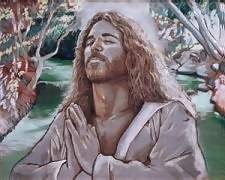 Overcoming Swaying Faith Matthew 14:22-32
The Lord wants to do far more in believers' lives and through their witness than most are willing to allow. We believe that He can do great things, but the problem is that we are not sure He will act on our behalf. Consequently, we feel we are unable to trust Him fully for personal answers.
Vacillating between faith and doubt like a boat in a storm makes for a sick and tired Christian. If we desire to calm the sea of faith, we must first act on our will rather than simply making choices according to feelings or sight. Peter walked on water because he proceeded in trust instead of by reason. As believers, we will not become stable in our faith until we recognize that believing God is a choice.
The second action of a faithful believer is to focus attention on God.When we look at our circumstances, we are restricted to our own limited view of the situation. As long as Peter was staring at Jesus, his feet stayed on the water's surface, but the moment he looked at the wind-whipped waves, he began to sink.
Finally, we are to maintain our focus on the Lord by keeping our mind in the Word. We cannot trust our sight, reason, or knowledge to steer us through a storm of doubt. All we can truly depend upon is Scripture.
Choose to believe that the Lord will work on your behalf. Then focus your attention upon Him, and claim a promise from Scripture that applies to the situation challenging you. When those three actions regularly become a part of your life, you will stop swaying. The heavenly Father will honor your steadfast faith.
 The Faith to Hold Out
Hebrews 12:1-3
Sometimes our life seems like a long, dark tunnel. Perhaps we are unable to discover a solution for a problem, or we cannot find relief from pain. Regardless of the direction we turn, we find no hope for anything better than our present circumstances.
Thankfully, we serve a God who feels our pain and knows our limitations first-hand. Jesus Christ walked through the valley of the shadow of death and cried out, "My God, My God, why have You forsaken Me?"(Mark 15:34). This means that when our faith is stretched to the breaking point, our strength is exhausted, and our dreams are broken like shattered glass, Jesus understands. And He asks us to hold out when everything in us screams to give up.
Giving up means abandoning God's help for our own puny strength.We try to manipulate a situation or simply avoid pain. In essence, we're choosing to believe that Satan in his worldly power is stronger than Christ within us—which is the exact opposite of what the Bible says is true. (1 John 4:4) Of course, the Devil is not more powerful, but we let him win a battle if we give up on the assurance that God will see us through difficulty. When we have that attitude, we miss the Father's blessing and limit our usefulness in His kingdom.
Even when we cannot detect His involvement, God is working every moment on our problem. But we must trust His perfect timing for revealing the answer. Your Father knows your hurt, and He will bring you through that dark tunnel. Do not give up before reaching His blessing
Wednesday, May 21, 2008
 The Swaying Battle of Faith
James 1:1-8
It is easy to have faith that God is going to do something in the distant future. For example, if you were to walk into a church service and ask the congregation, "Who believes that Jesus Christ is returning?" nearly every hand would go up. But if you ask an indebted man whether he thinks God will reduce his liability in three months, he is likely to express doubts. And yet our day-to-day life is where we must practice unswerving faith if we hope to be effective for the Lord.
James tells us that our faith cannot be like the waves of the sea. Stormy waters rush first in one direction and then seem to double back on themselves and race the opposite way. In the Christian life, we rush forward to do the Lord's will until He makes a difficult request or allows a painful experience to confront us. Suddenly we are driven in the other direction by our doubts.
The reason we hesitate to trust God fully is that we judge our circumstances by what we see. Sight is often the enemy of faith because our eyes and brains cannot envision a method for the Lord to do what He promises. Our scriptural knowledge that God can do anything and our experience of His past faithfulness make us want to follow His will. But the obvious impracticality of our situation fills us with doubt. And so we are tossed like a sea wave.
Faith can overcome doubt only through action. We turn a blind eye to circumstances and make the first step toward doing God's work. If we exercise our faith every day, those seas of doubt cannot rage so fiercely.
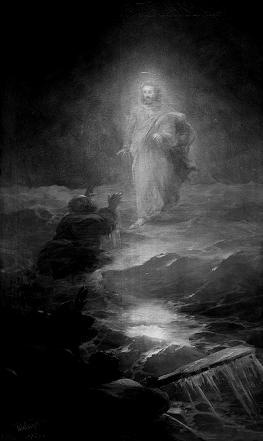 Why We Hesitate to Trust
Luke 5:1-11
On the Sea of Galilee, the optimal time for fishing had passed hours earlier, so the fishermen cleaned their nets instead. But one lowered his into the water at the request of an itinerant preacher. The reward for Peter's trust was a net-breaking catch.
As believers, we want equal success in over-coming doubts so that we can courageously follow God. But sometimes we rely on our own faculties to decide whether or not we will trust Him. Perhaps what He is asking of us seems unreasonable. For instance, the principle of tithing goes against human wisdom: When we give God one-tenth of our income, He makes the remaining 90 percent spread farther than a hoarded 100 percent could.
In other situations, we hesitate to trust the Lord because our knowledge or experience contradicts His plan. All of Peter's expertise indicated that fishing at such an hour would be useless. Sometimes God challenges believers to act even when they do not understand how they can be successful.
Listening to others' opinions is another stumbling block to unswerving faith. There is a time for seeking godly counsel, but when the Lord makes His will clear, we are to act. We are not to pick up the phone to ask a few friends what they think. No opinion matters except that of Jehovah, who does not make mistakes in presenting His plan.
The next time you find yourself in doubt, think about what is causing you to hesitate. Then you can pray specifically to overcome the faith hurdle and move on to receive your reward.
Monday, May 19, 2008
 It was the middle of the night. There were high winds, crashing waves, low visibility, and only a small boat on the Sea of Galilee. For the disciples, the situation had reached crisis proportions, and Jesus was not with them. He was on the mountainside praying, and they were alone.
Hidden by the storm, perhaps they thought Jesus had forgotten them. However, He knew exactly where the disciples were and what they were experiencing. Though we can’t see Jesus physically, He is omniscient—He can identify where we are at every moment. No darkness can hide us; no trial can obscure His vision. We are always seen, known, and understood!
Leaving that place of prayer, Jesus sought out the disciples. He will do the same for us as well. However, the disciples did not recognize Him because He went to them by walking on the water. Jesus often does not come the way we might expect. Our preconceived ideas of how He works can cause us to wonder where He is and fail to recognize His nearness.
Experiencing Jesus’ presence in hard times can teach us precious truths. During an earlier rough sea adventure, the disciples observed both Jesus’ trust in God and His authority over nature. (Matthew 8:23-26) In the latest storm, they watched the Lord walk on water—and they saw one of their own do it too. Through the storms, they learned who Jesus was, what He could do, and what their own potential was.
When turmoil hits, let’s ask for spiritual eyes to discern the Lord’s presence.. Then, we must listen for His voice and obey. (John 10:27)
Through Troubled Waters
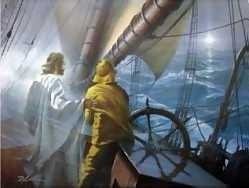
Psalm 32:1-8
In a terrible storm, the familiar disappears because swirling rain blocks our vision. Difficulties bring about the same effect in our minds. They create strong emotions that cloud our ability to think. God has given us some promises to help us find our way through trials.
First, the Lord has committed Himself to instructing us. When we wait on Him, He will give us insight into our situation—since He sees all things, He knows what steps we are to take. We may be surprised at the instruction, though, for His ways are not like our human ones. (Isaiah 55:8-9) For example, when people hurt us badly, God’s Spirit will remind us that vengeance is the Lord’s; our part is to live at peace with them. (Romans 12:17-19)
Second, God has promised to teach us how to apply the truth He has given us. As we meditate on Scripture, His Spirit will show us the relevance of God’s Word to our problem. Let’s imagine we are faced with someone making unreasonable financial demands of us. How are we to respond? God may tell us to meet the request or even to give extra in order to bless that person. (Matthew 5:40-41)
Third, the Lord provides guidance as He keeps watch over us. When company is present, a parent may quietly guide a child’s behavior through various “looks” in order to encourage, instruct, or warn. In a similar way, the Holy Spirit gives us spiritual promptings to guide our actions and decisions.
What troubled waters are you trying to navigate? These promises are stepping stones to finding your way through those harsh circumstances.
Learning in Troubled Waters
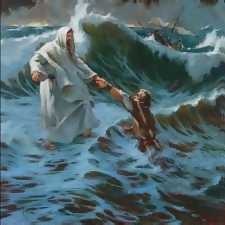 Psalm 34:1-19
God promises that when we face challenging times, He will keep His divine eye upon us. He wants to teach and guide us through the difficulty, but we must position ourselves to respond to His signals. That is, we need to:
Have a real longing to follow God’s way and His way only. The Scriptures compare this kind of yearning to “a deer panting for water”(Psalm 42:1),which should describe us each time we choose to wait for God’s direction rather than act on our own.
Be willing to be taught by God. He will transform trials into times of learning for those who look to Him for guidance. Such was the case with Hannah as she pleaded for a child (1 Samuel 1:1-2:10). It was also true for Mary and Martha when their brother Lazarus died. (John 11:17-27) We need willing spirits if we are to learn what God wants to teach us in the “classroom” of His choice. Most of us would design a comfortable, pleasurable setting in which to gain understanding. But God knows the best way to instill wisdom and may choose pain and trouble as the place of instruction.
Yield to His will. Before we know God’s solution, He asks us to commit ourselves to His way. The Lord calls us to walk by faith, not by sight (2 Corinthians 5:7) and to acknowledge our helplessness without Him. (John 15:5) To declare His way is always best.
Troubles are an unwelcome fact of life, but they can have value. Often what we wanted to avoid turns out to be the very thing we needed. God asks that we have a tender heart, a teachable spirit, and a yielded will. Does this describe you?
Sunday, May 11, 2008
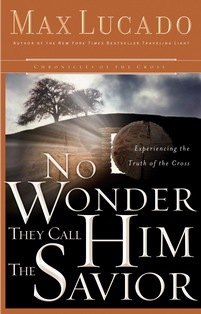 He Understands
Cries of loneliness. Tune out the traffic and turn down the TV. The cry is there. You can hear their cries. You can hear them in the convalescent home among the sighs and the shuffling feet. You can hear them in the prisons among the moans of shame and the calls for mercy. You can hear them if you walk the manicured streets of suburban America, among the aborted ambitions and aging homecoming queens. Listen for it in the halls of our high schools where peer pressure weeds out the “have-nots” from the “haves.”
Many of you have been spared this cruel cry. Oh, you have been homesick or upset a time or two. But despair? Far from it. Suicide? Of course not. Be thankful that it hasn’t knocked on your door. Pray that it never will. If you have yet to fight this battle, you are welcome to read on if you wish, but I’m really writing to someone else.
I am writing to those who know this cry firsthand. I’m writing to those of you whose days are bookended with broken hearts and long evenings. I’m writing to those of you who can find a lonely person simply by looking in the mirror.
For you, loneliness is a way of life. The sleepless nights. The lonely bed. The distrust. The fear of tomorrow. The unending hurt.
When did it begin? In your childhood? At the divorce? At retirement? At the cemetery? When the kids left home?
Maybe you have fooled everyone. No one knows that you are lonely. On the outside you are packaged perfectly. Your smile is quick. Your job is stable. Your clothes are sharp. Your waist is thin. Your calendar is full. Your walk brisk. Your talk impressive. But when you look in the mirror, you fool no one. When you are alone, the duplicity ceases and the pain surfaces.
Or maybe you don’t try to hide it. Maybe you have always been outside the circle looking in, and everyone knows it. Your conversation is a bit awkward. Your companionship is seldom requested. Your clothes are dull. Your looks are common. Ziggy is your hero and Charlie Brown is your mentor.
Am I striking a chord? If I am, if you have nodded or sighed in understanding, I have an important message for you.
The most gut-wrenching cry of loneliness in history came not from a prisoner or a widow or a patient. It came from a hill, from a cross, from a Messiah. “My God, my God,” he screamed, “why did you abandon me!” (Matthew 27:46)
Never have words carried so much hurt. Never has one being been so lonely.
Out of the silent sky come the words screamed by all who walk in the desert of loneliness. “Why? Why did you abandon me?”
I keep thinking of all the people who cast despairing eyes toward the dark heavens and cry “Why?”
And I imagine him. I imagine him listening. I picture his eyes misting and a pierced hand brushing away a tear. And although he may offer no answer, although he may solve no dilemma, although the question may freeze painfully in midair, he who also was once alone, understands.
(extract is taken from "No Wonder They Call Him the Savior" by Max Lucado)a link to buy the whole book:
http://www.maxlucado.net/shopping6.00/shopexd.asp?id=23402Tuesday, April 15, 2008

A letter to God from a child about a father
Dear God,
Thanks for giving me a daddy. You knew just what I’d need! In case you need to make
daddies for other kids, I thought you might like to know what I like best about the one you sent me:
A good dad ...
1. knows everything (like how to tie shoes and drive a car)
2. is really smart (he even knows where the wind goes after it blows through the trees)
3. has a forgiving heart (for when I mess up)
4. is loaded with patience, patience, patience (he probably won’t need it, but just in case...)
5. has a comfy lap and a big laugh (you understand about that, don’t you?)
6. tells me all about you and your son.
Your friend,
A Kid
P.S. I almost left out the best part! A good dad has real strong arms (to catch me when I fall. He says you’re just like that, too.)
(extract is taken from “What makes a good dad?” by Max Lucado
for downloading in full version
http://maxlucado.com/pdf/good.dad.pdf
Friday, April 11, 2008
 He's Been There by Max Lucado
“. . . shall not perish but have eternal life . . .”
On a trip to China, I rode past Tiananmen Square in a bus full of Westerners. We tried to recollect the causes and consequences of the revolt. Our knowledge of history was embarrassing. One gave one date; another gave a different one. One person remembered a certain death toll; someone else disagreed. All this time our translator remained silent.
Finally one of us asked her, “Do you remember anything about the Tiananmen Square revolt?”
Her answer was solemn. “Yes, I was a part of it.”
We quickly grew quiet as she gave firsthand recollections of the bloodshed and oppression. We listened, because she’d been there.
We who follow Christ do so for the same reason. He’s been there . . .
He’s been to Bethlehem, wearing barn rags and hearing sheep crunch. Suckling milk and shivering against the cold. All of divinity content to cocoon itself in an eight-pound body and to sleep on a cow’s supper. Millions who face the chill of empty pockets or the fears of sudden change turn to Christ. Why?
Because he’s been there.
He’s been to Nazareth, where he made deadlines and paid bills; to Galilee, where he recruited direct reports and separated fighters; to Jerusalem, where he stared down critics and stood up against cynics.
We have our Nazareths as well—demands and due dates. Jesus wasn’t the last to build a team; accusers didn’t disappear with Jerusalem’s temple. Why seek Jesus’s help with your challenges? Because he’s been there. To Nazareth, to Galilee, to Jerusalem.
But most of all, he’s been to the grave. Not as a visitor, but as a corpse. Buried amidst the cadavers. Numbered among the dead. Heart silent and lungs vacant. Body wrapped and grave sealed. The cemetery. He’s been buried there.
You haven’t yet. But you will be. And since you will, don’t you need someone who knows the way out?
http://www.maxlucado.net/shopping6.00/shopexd.asp?id=25645
 The Blacksmith's Shop by Max Lucado
In the shop of a blacksmith, there are three types of tools. There are tools on the junk pile:
outdated, broken, dull, rusty.
They sit in the cobwebbed corner, useless to their master, oblivious to their calling.
There are tools on the anvil:
melted down, molten hot, moldable, changeable.
They lie on the anvil, being shaped by their master, accepting their calling.
There are tools of usefulness:
sharpened, primed, defined, mobile.
They lie ready in the blacksmith’s tool chest, available to their master, fulfilling their calling.
Some people lie useless:
lives broken, talents wasting, fires quenched, dreams dashed.
They are tossed in with the scrap iron, in desperate need of repair, with no notion of purpose.
Others lie on the anvil:
hearts open, hungry to change, wounds healing, visions clearing.
They welcome the painful pounding of the blacksmith’s hammer, longing to be rebuilt, begging to be called.
Others lie in their Master’s hands:
well tuned, uncompromising, polished, productive.
They respond to their Master’s forearm, demanding nothing, surrendering all.
We are all somewhere in the blacksmith’s shop. We are either on the scrap pile, in the Master’s hands on the anvil, or in the tool chest. (Some of us have been in all three.)
From the shelves to the workbench, from the water to the fire…I’m sure that somewhere you will see yourself.
Paul spoke of becoming “an instrument for noble purposes.” And what a becoming it is! The rubbish pile of broken tools, the anvil of recasting, the hands of the Master- it’s a simultaneously joyful and painful voyage.
And for you who make the journey—who leave the heap and enter the fire, dare to be pounded on God’s anvil, and doggedly seek to discover your own purpose—take courage, for you await the privilege of being called “God’s chosen instruments.”
http://www.maxlucado.net/shopping6.00/shopexd.asp?id=23401
Monday, April 7, 2008
 Think about your mother
Somebody said you learn how to be a mother by instinct... that somebody never took a three-year-old shopping.
Somebody said being a mother is boring... that somebody never rode in a car driven by a teenager with a driver's permit.
Somebody said if you're a "good" mother, your child will "turn out good"... that somebody thinks a child comes with directions and a guarantee.
Somebody said "good" mothers never raise their voices... that somebody never came out the back door just in time to see her child hit a golf ball through the neighbor's kitchen window.
Somebody said you don't need an education to be a mother... that somebody never helped a fourth grader with his math.
Somebody said you can't love the fifth child as much as you love the first... that somebody doesn't have five children.
Somebody said a mother can find all the answers to her child-rearing questions in the books... that somebody never had a child stuff beans up his nose or in his ears.
Somebody said the hardest part of being a mother is labor and delivery... that somebody never watched her "baby" get on the bus for the first day of kindergarten... or on a plane headed for military "boot camp."
Somebody said a mother can do her job with her eyes closed and one hand tied behind her back... that somebody never organized seven giggling Brownies to sell cookies.
Somebody said a mother can stop worrying after her child gets married... that somebody doesn't know that marriage adds a new son or daughter-in-law to a mother's heartstrings.
Somebody said a mother's job is done when her last child leaves home... that somebody never had grandchildren.
Somebody said your mother knows you love her, so you don't need to tell her... that somebody isn't a mother.


